Custom Plastic Extrusion
The definitive process for creating custom, continuous profiles. We transform thermoplastic pellets into high-quality tubes, rods, channels, and custom shapes for a wide range of applications.
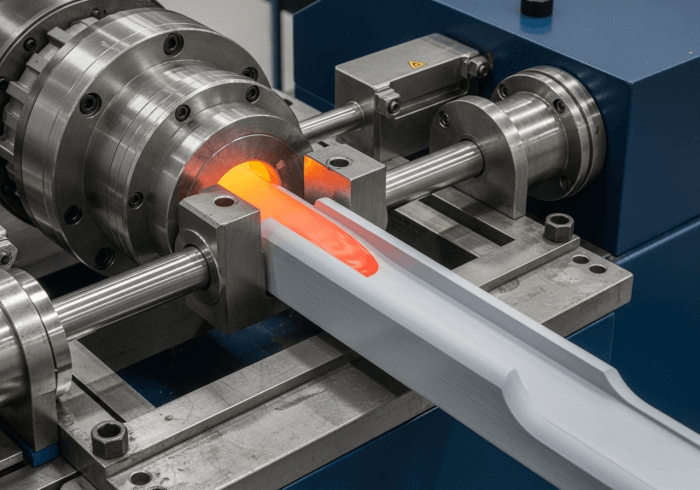
The Process: Pushing Plastic Through a Die
Plastic extrusion is a high-volume manufacturing process where raw plastic material (in the form of pellets) is melted and forced through a custom-made tool called a die. The die has a specific cross-sectional shape, and the molten plastic takes this shape as it is pushed through.
As the plastic exits the die, it is cooled (typically in a water bath) and solidifies, forming a long, continuous profile with the desired shape. This profile is then pulled by rollers and cut to its final length. It is an extremely efficient process for creating parts that have a constant cross-section along their length.
Common Applications for Plastic Extrusion
Pipes & Tubing
From plumbing pipes (PVC) and industrial tubing (HDPE) to medical catheters (PEEK), this is one of the largest applications of extrusion.
Window & Door Profiles
The frames and seals for vinyl (PVC) windows and doors are created as long, complex extruded profiles that are then cut and assembled.
Wire Insulation
The process of coating electrical wire with a protective, insulating layer is a form of extrusion where the wire is pulled through the center of the die.
Custom Profiles & Trim
Creating custom decorative trim, channels, weather stripping, and edge guards for a huge variety of consumer and industrial products.
Plastic Extrusion FAQ
What materials can be extruded?
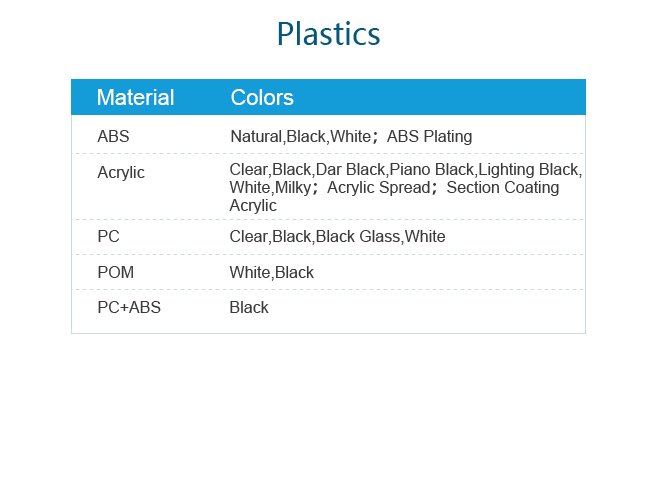
A wide range of thermoplastics can be extruded. The most common include PVC, HDPE, LDPE, Polypropylene, ABS, and Polycarbonate. The choice depends on the required flexibility, durability, and cost.
What is co-extrusion?
Co-extrusion is a process where two or more different materials are extruded through a single die to create a profile with multiple layers. For example, a rigid PVC profile could be co-extruded with a soft, flexible TPE seal along one edge, creating a single, integrated part.
How does extrusion compare to other processes like molding or machining?
Extrusion is only suitable for parts that have a constant cross-section. If your part has changes in its profile along its length (like holes, bosses, or pockets), it must be made with another process like injection molding or CNC machining, or have those features added in a secondary machining operation after extrusion.