MATERIAL & PROCESS FOCUS
CNC Machining Brass
The standard for high-speed machining and decorative appeal. We leverage the unique properties of brass to create beautiful, functional parts with exceptional speed and precision.
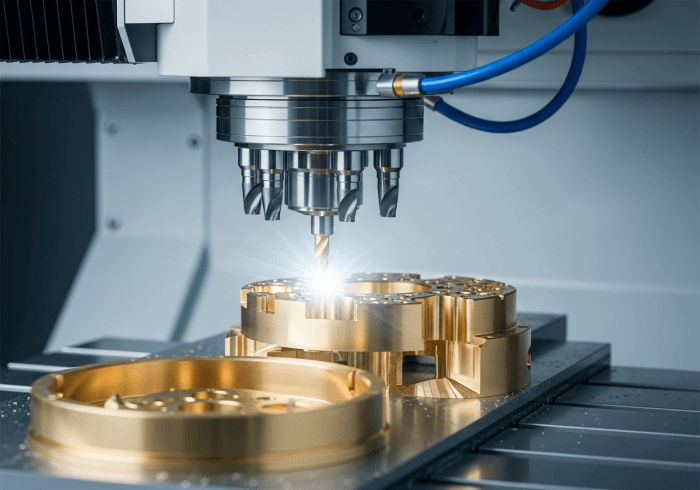
The Gold Standard for Machinability
Brass is a metal alloy composed primarily of copper and zinc. The proportions of copper and zinc can be varied to create a range of brasses with different properties. It is prized in manufacturing for its unique combination of characteristics.
Unparalleled Machinability
Brass, particularly C360 Free-Cutting Brass, is considered the easiest of all metals to machine. It produces small, broken chips, allowing for very high cutting speeds, long tool life, and an excellent surface finish.
Good Corrosion Resistance
Brass exhibits good resistance to corrosion from water and many chemicals, though not as resistant as stainless steel or bronze in marine environments.
Aesthetic Appeal
With its bright, gold-like appearance, brass is often chosen for decorative hardware, musical instruments, and high-end consumer products where visual appeal is important.
Common Applications for Machined Brass
Due to its ease of machining and good properties, brass is a cost-effective choice for high-volume, small, complex parts.
- Plumbing & Pipe Fittings: Nipples, elbows, valves, and connectors benefit from brass's corrosion resistance and ease of forming threads.
- Electrical Components: Terminals, contacts, and connectors where good electrical conductivity (though less than pure copper) is needed.
- Fasteners & Hardware: Nuts, bolts, and decorative hardware that require a combination of strength and aesthetic appeal.
- Musical Instruments: The acoustic properties of brass make it the essential material for instruments like trumpets, horns, and cymbals.
Brass Machining FAQ
What is the most common grade of brass you machine?
The most common grade by far is C36000 Free-Cutting Brass. This alloy has a small amount of lead added, which acts as a microscopic lubricant and chip breaker. This is what gives it its exceptional machinability and makes it the standard for most turned and milled brass components.
Does brass tarnish?
Yes, brass will naturally tarnish and develop a patina over time when exposed to air. For decorative applications where a bright finish is desired, a clear lacquer or protective coating can be applied after machining to prevent tarnishing.
Is brass lead-free?
Standard C360 brass contains a small percentage of lead. For applications requiring compliance with RoHS or drinking water regulations (NSF), specific lead-free or low-lead brass alloys are available. Please specify if your project has these requirements.